Say "creatine" and most people picture a 22-year-old in a gym vest shaking a giant tub. But it's one of the most studied supplements there is, and some of the most interesting research is now in people well past their gym-vest years.
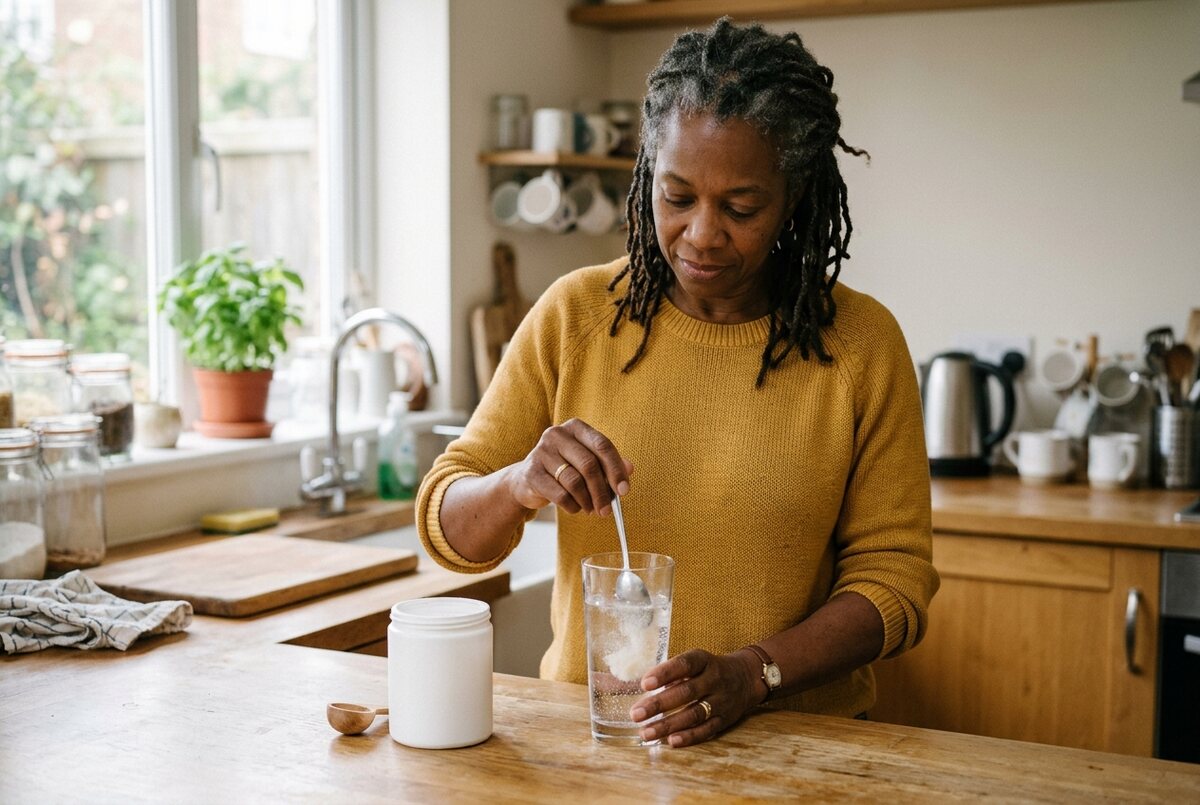
Here's what the evidence supports for the over-40s, where the hype has run ahead of it, and who should check with their GP first.
What Creatine Actually Is
Creatine isn't a steroid or a stimulant. It's a natural compound your body makes from amino acids, and you get a little more from meat and fish. Most of it sits in your muscles, where it helps supply quick bursts of energy for short efforts: climbing stairs, lifting a suitcase, getting up from a low chair.
That last part is why it matters to us. Muscle and strength tend to drift downwards from middle age, and strength is what keeps everyday life easy. If you've tried our chair test, you'll know how quickly it shows.
Muscle and Strength: The Strongest Evidence
This is where creatine has its best track record, and the key word is with. Taken alongside resistance training, it appears to give older adults a useful extra nudge.
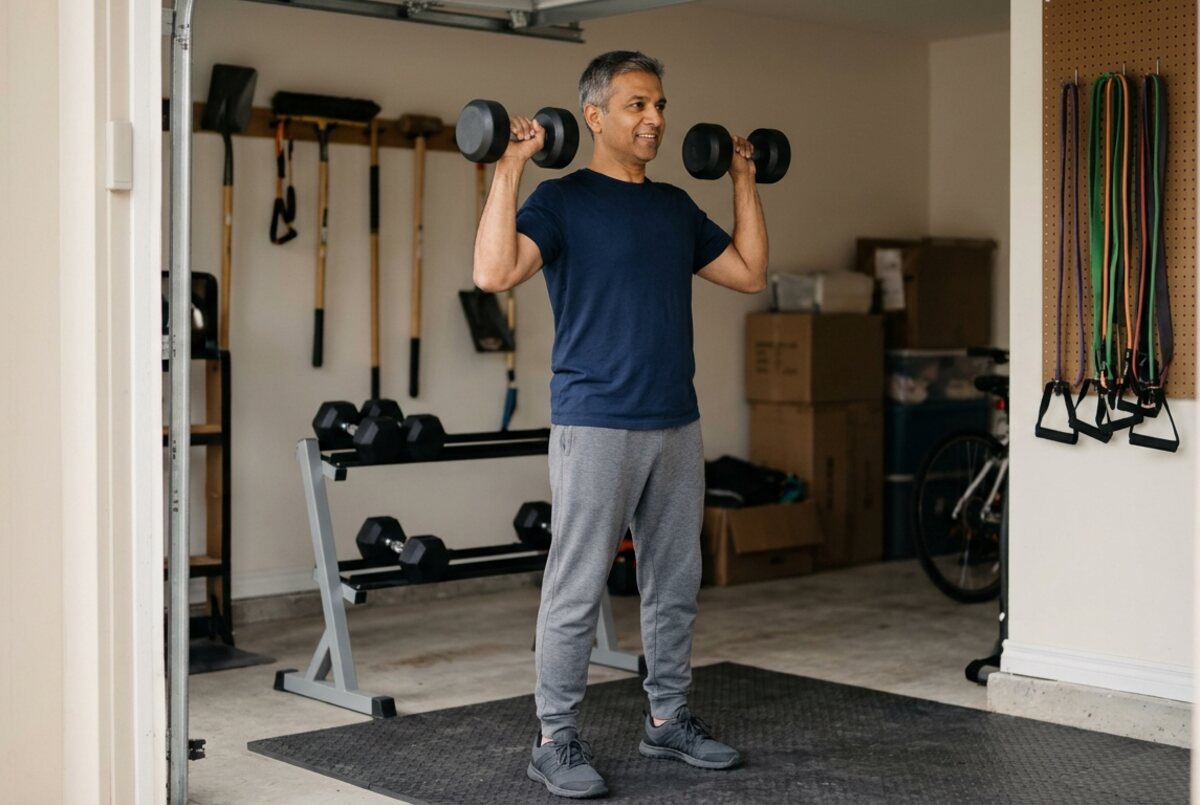
Regulators have looked at this too. In the UK and EU, one of the few approved health claims for creatine is aimed at exactly our age group: "Daily creatine consumption can enhance the effect of resistance training on muscle strength in adults over the age of 55." It's based on at least 3 g a day, combined with regular training.
What If You Don't Go to the Gym?
This is where the headlines got excited. In a 2026 Texas A&M study, 64 healthy adults aged 45 to 65 took 10 g of creatine or a placebo for 12 weeks. Those who took creatine without exercising gained about 1.1 kg of lean tissue and got stronger on leg and bench presses.

It's encouraging, but read the small print. Only 13 people finished that creatine-without-exercise group. People chose for themselves whether to exercise. The dose was double the usual amount. Much of the gain may be extra water held in the muscle, and one of the authors has advised a creatine manufacturer. People who exercised generally did better. So it isn't a replacement for moving, even if it may help a little on its own.
Memory and Brain: Promising, but Early
Your brain uses creatine for energy as well, which is why researchers are interested. A 2022 analysis of eight trials found a modest improvement in memory overall, with a bigger effect in adults aged 66 to 76. However, that older group came from just two studies, and other scientists have challenged how the data was counted.

A 2025 review of adults over 55 found links with better memory and attention in five out of six studies. But only one of those studies was rated good quality, and four simply looked at what people ate. The Texas A&M results were mixed too: some memory tests improved, several attention tests didn't.
So it's worth watching, but don't take it expecting to clear brain fog, and it isn't a way of preventing or treating dementia.
Women, Menopause and Bones
You may have seen creatine promoted heavily for menopause. The evidence is thinner than the social media posts suggest. The largest study, which followed 237 postmenopausal women for two years, found creatine added no measurable benefit to bone density on top of training and walking, though a couple of measures of bone shape held up better. A much-shared 2025 trial of brain effects in midlife women had only 36 participants, which is too few to say much.
The muscle and strength findings still apply to women, but it's fair to treat claims about bones, mood and hot flushes with caution for now.
How It's Usually Taken
- Creatine monohydrate is the form used in most of the research. Fancier, pricier versions haven't got the same evidence behind them.
- Around 3 to 5 g a day is the amount usually studied, stirred into water or a drink. Time of day doesn't seem to matter much.
- "Loading" isn't necessary. Taking large doses for a week fills your muscles faster, but 3 g a day gets there in about four weeks.
- Pair it with strength work, ideally two or three times a week. That's where the evidence is best.
Is It Safe? And Who Should Check First?
For healthy adults at the usual amounts, reviews haven't found kidney damage. The hair loss worry comes from one small study of young rugby players that never measured hair and hasn't been repeated. Some people do put on a little weight at first, which is mostly water, and large doses can upset your stomach.
One practical point: creatine can raise the creatinine reading on a kidney blood test without your kidneys being any different. Tell your GP you're taking it before any blood test.
Speak to your GP or pharmacist first if you have kidney disease or have ever had kidney problems, take regular prescription medicine, are being treated for a medical condition, or are pregnant or breastfeeding. The American Kidney Fund says there isn't yet enough data to call it safe for people with kidney disease.
The Bottom Line
Creatine isn't a miracle powder, and it won't do the work for you. But for over-40s who do some strength training, or are ready to start, it's a cheap, well-researched option that many people find worth trying. Start with the exercise, and treat creatine as the helper.
This article is for general information only and isn't medical advice. Always check with your doctor or pharmacist before starting a new supplement.
Sources
- Chilibeck et al. 2017, Open Access Journal of Sports Medicine (22 trials in older adults)
- Regulation 2017/672 (approved claim for adults over 55)
- Texas A&M trial 2026, Journal of the International Society of Sports Nutrition
- Prokopidis et al. 2022, Nutrition Reviews (memory)
- Marshall et al. 2025, Nutrition Reviews (adults over 55)
- Chilibeck et al. 2023, Medicine & Science in Sports & Exercise (bones, two years)
- CONCRET-MENOPA trial 2025 (midlife women)
- Antonio et al. 2021, Journal of the International Society of Sports Nutrition (safety and common myths)
- American Kidney Fund (kidney patients and blood tests)
Want a simple plan to reset your health after 40?
Get the Free Guide →