Stairs used to be something you didn't think about. Then one day you notice your hand reaching for the banister, or an ache at the front of your knee on the way down. It's one of the most common complaints after 40, and in many cases there's a lot you can do about it yourself.
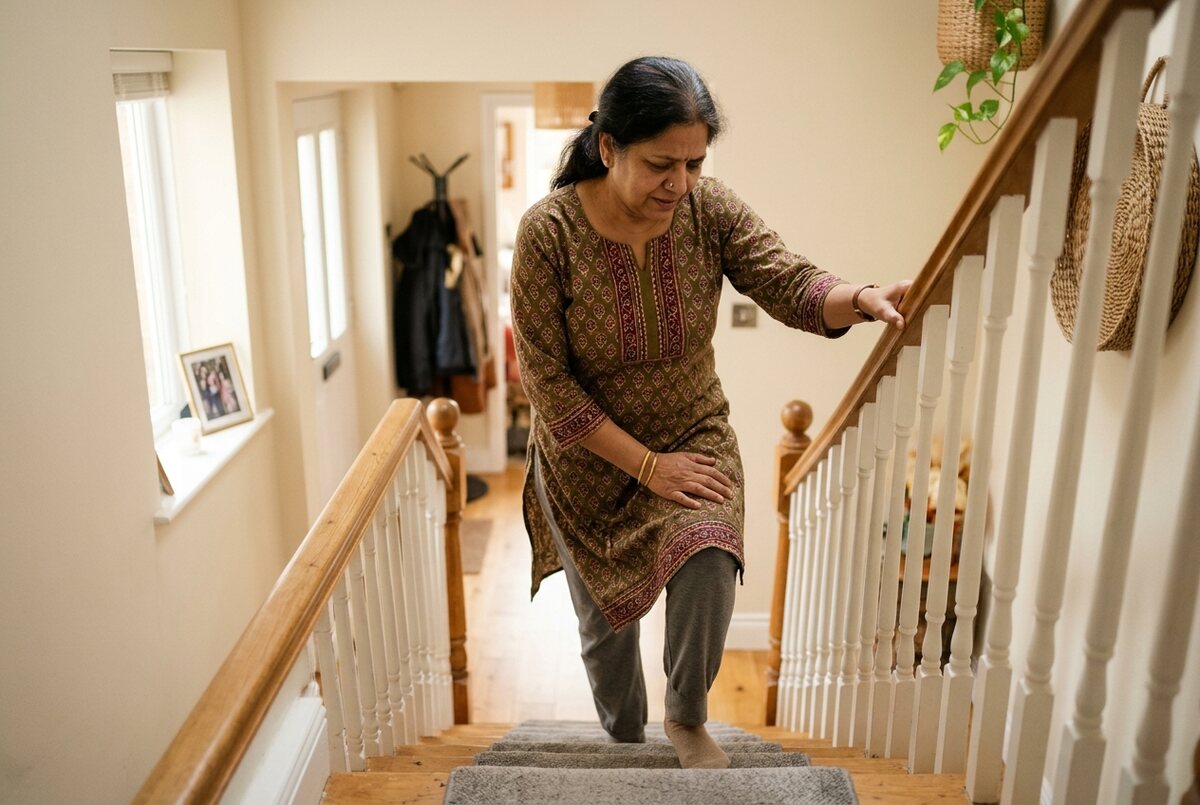
Here's why stairs show up knee problems, what the research says really helps, and when it's time to get your knee looked at.
Why Stairs Are So Hard on Knees
On the stairs, your whole body weight goes through one bent knee at a time, and the force behind your kneecap goes up as the knee bends. Coming down is often the harder direction, because your thigh muscles have to work as a brake.
Muscles matter here. NHS physiotherapy advice notes that weak thigh and hip muscles are very common in people with pain around the kneecap, and they leave the joint with less support on tasks like climbing stairs.
The Two Usual Suspects
- Pain around or behind the kneecap (patellofemoral pain). It's often worse on stairs, squatting, or after sitting for a long time.
- Osteoarthritis of the knee. This tends to bring stiffness and aching, which many people notice more as they get older.
The two can feel alike and they can overlap. Only a proper assessment can tell you which you've got, but the good news is that the first steps for both are similar.
What the Research Says About Exercise
Exercise is the main treatment, and in the UK it's official. NICE, which sets guidance for the NHS, calls therapeutic exercise a core treatment for osteoarthritis, and says it should be offered to everyone with the condition.
So it isn't a miracle cure. But it's safe for most people, it's free, and the type doesn't seem to matter much, so the best exercise is one you'll keep doing. For pain around the kneecap, reviews also point towards strengthening both the hips and the knees, though the evidence is lower quality.
Three Simple Exercises to Try
These are based on the kind of exercises recommended by Versus Arthritis and NHS physiotherapists. Go gently, and hold on to something steady.
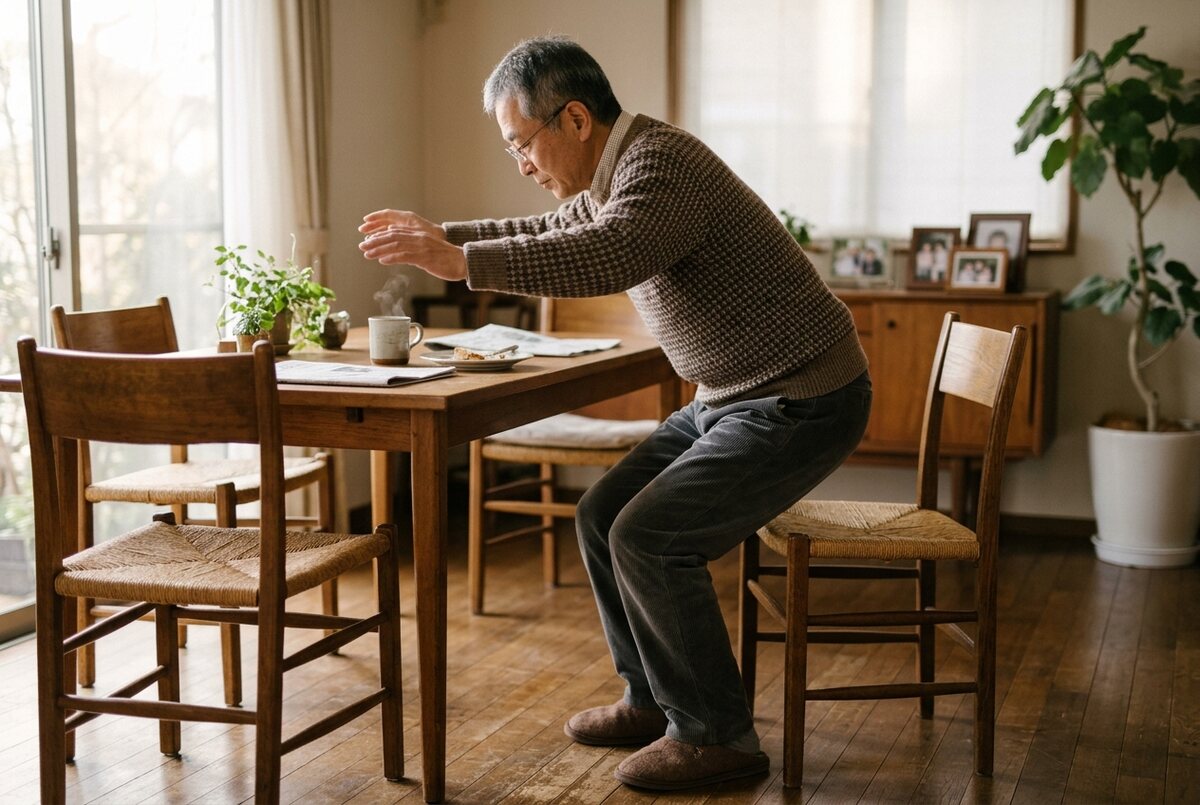
- Sit to stand. Sit on a firm chair, feet flat. Stand up slowly without using your hands if you can, then lower yourself slowly. Use a higher seat, or a cushion, if it's too hard at first.
- Seated leg straighten. Sit tall and straighten one leg out in front of you. Hold for a slow count of 10, then lower it slowly. Repeat 10 times on each leg.
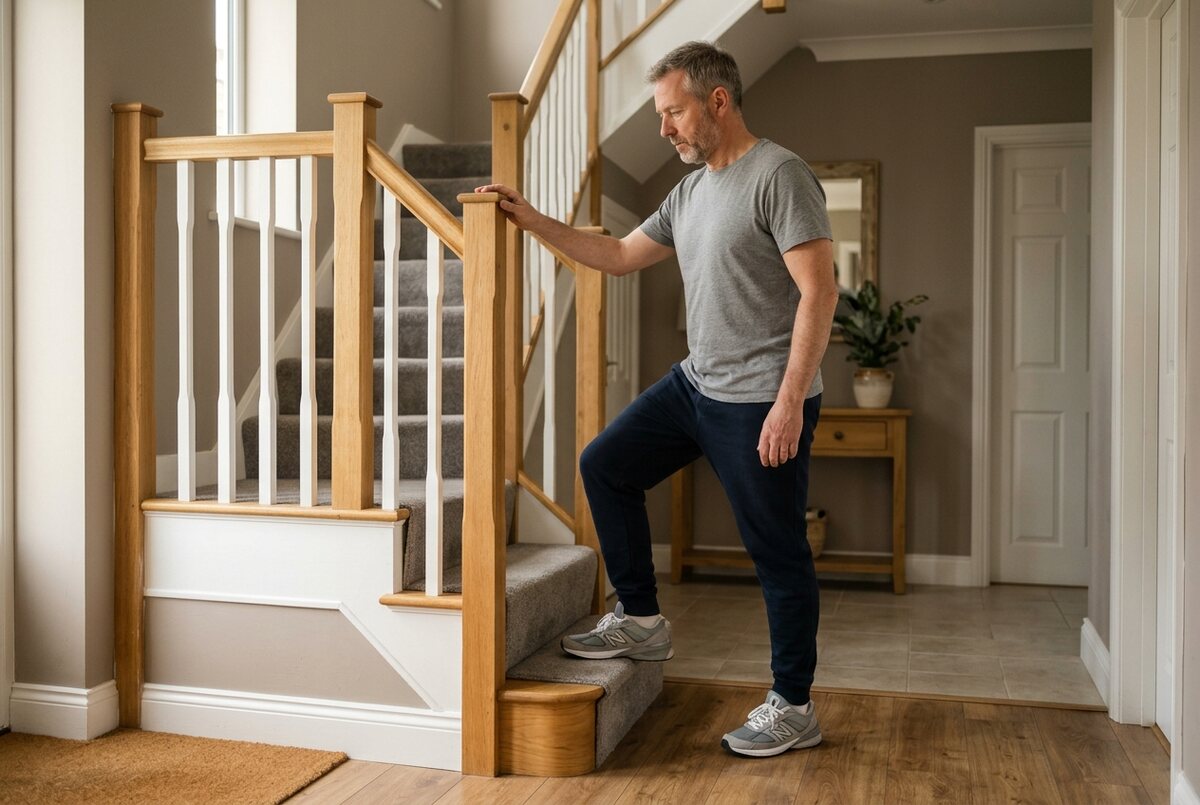
- Step-ups. Use the bottom stair and hold the banister. Step up with one leg, bring the other to join it, then step back down slowly. It works your thighs and buttocks, the muscles that help keep the knee steady.
A little discomfort when you start is normal, and NICE says joint pain may increase at first. As a guide, Australian GP guidance suggests easing off if the pain is severe, stays worse for more than two hours afterwards, or your knee is more swollen the next day.
Small Changes on the Stairs
- Use the handrail. There's no prize for not holding on.
- One step at a time if you need to. Physios often suggest leading with your stronger leg going up, and your sorer leg coming down.
- Keep walking on the flat too. Our guide to walking for your joints explains why.
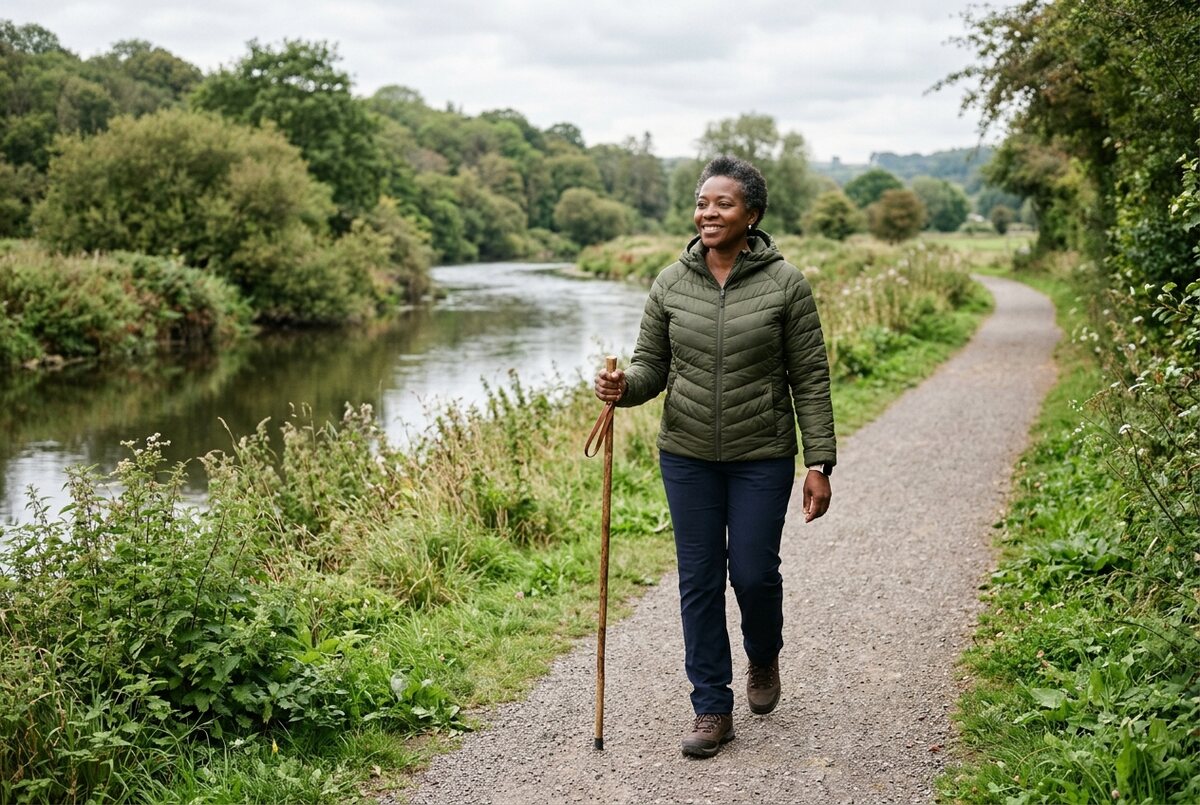
- Consider a walking stick if your knee is really troubling you. NICE lists these as worth considering, whereas it doesn't routinely recommend insoles, braces or knee supports.
A Word About Weight
If you're carrying extra weight, your knees feel every pound of it on the stairs. One study of 142 overweight older adults with knee osteoarthritis estimated that each pound lost took about four pounds of load off the knee with every step. NICE says any amount of weight loss is likely to help, and that losing 10% of your body weight is likely to be better than 5%.
When to Get It Checked
See your GP if your knee hasn't improved within a few weeks. In many areas you can also refer yourself straight to an NHS physiotherapist.
The NHS says to get urgent advice from 111 if your knee is very painful, you can't move it or put weight on it, it's badly swollen or has changed shape, it locks or gives way, or it's red and hot and you have a high temperature or feel shivery.
The Bottom Line
Sore knees on the stairs are common, but they don't have to be something you just put up with. A few minutes of simple strengthening several times a week is a sensible place to start, and many people find stairs get easier as their legs get stronger. It's also worth reading what's making joint pain worse, and trying our chair test to see where you're starting from.
This article is for general information only and isn't medical advice. If you have a knee condition or have had surgery, check with your GP or physiotherapist before starting new exercises.
Sources
- Lawford et al. 2024, Cochrane review (exercise for knee osteoarthritis)
- NICE guideline NG226 (osteoarthritis)
- NHS: knee pain
- Bradford Teaching Hospitals NHS leaflet (pain around the kneecap)
- Versus Arthritis: exercises for the knees
- RACGP: exercise for patellofemoral pain
- Messier et al. 2005, Arthritis & Rheumatism (weight and knee load)
Want a simple plan to reset your health after 40?
Get the Free Guide →