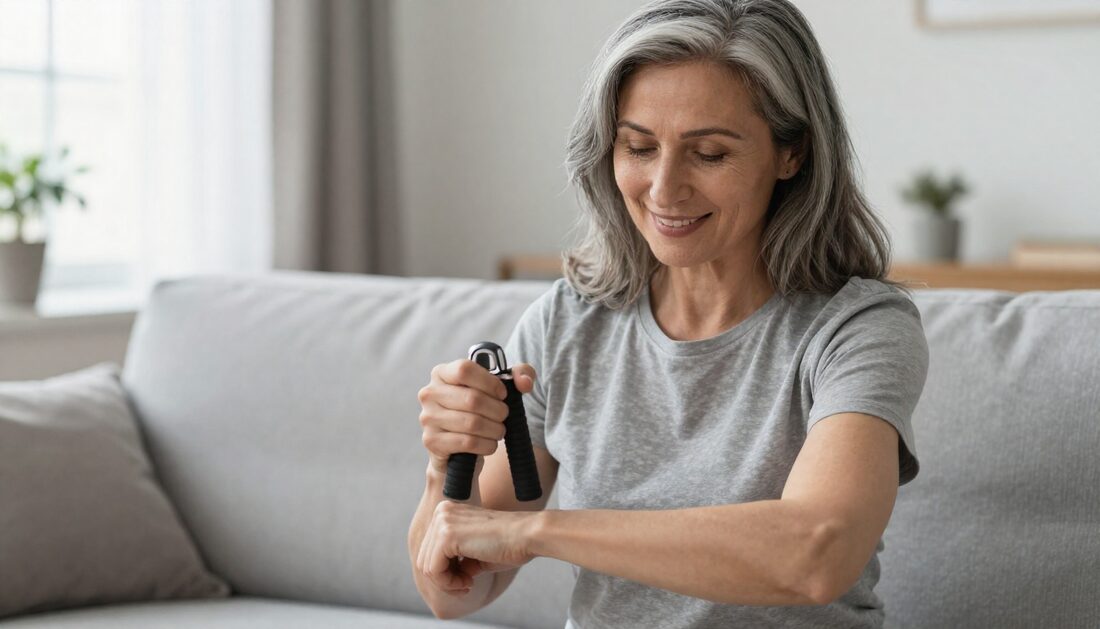
Squeeze your hand as hard as you can right now. In a study of nearly 140,000 adults, researchers found that grip strength predicted the risk of death — including death from heart disease — better than blood pressure did. Not as a party trick — as a genuine marker of health that doctors and longevity researchers increasingly take seriously.
This isn't quite what most people expect when they think about exercise after 40. Cardio has dominated the conversation for decades. But a body of research accumulated over the past few years — including a large study published in 2026 — is making a compelling case that muscle strength and power are the most important physical attributes to cultivate if you want a longer, more functional life.

What the Research Actually Shows
The PURE study, published in The Lancet in 2015, followed adults aged 35 to 70 across 17 countries. Every 5 kg drop in grip strength was linked to a 16% higher risk of death from any cause — and grip was a stronger predictor of death than blood pressure. More recently, researchers at the University at Buffalo followed more than 5,000 women aged 63 and over for about eight years. Those with a stronger grip and faster chair-stand times had a lower risk of death, even after accounting for how active they were and their walking speed.
A 2023 review of 49 studies, published in the Journal of Cachexia, Sarcopenia and Muscle, found that people with muscle wasting had about a 36% higher risk of death from any cause. But here's the important nuance that's emerged more recently: it's not just about how much muscle you have — it's about what your muscles can actually do.
The Difference Between Strength and Power (And Why It Matters)
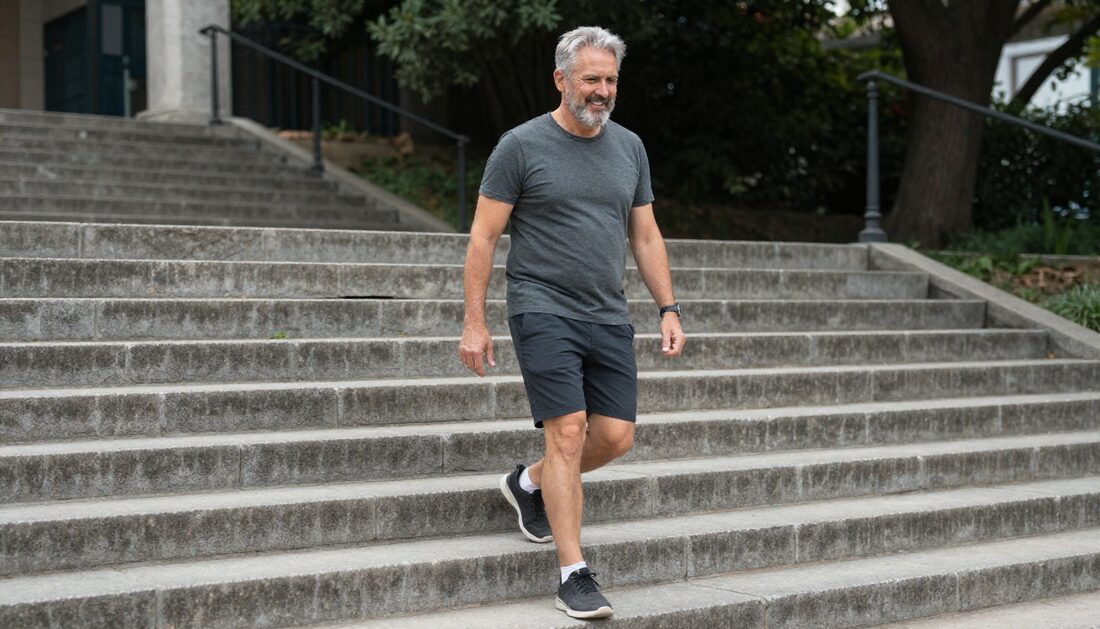
Strength is how much force your muscles can produce. Power is how quickly they can produce it. These are related but distinct — and a 2022 review of 20 trials in JAMA Network Open found that power training gave older adults a modest extra improvement in everyday physical function compared with traditional strength training.
Why might that be? In real life, many stumbles turn into falls because the muscles can't react quickly enough to an unexpected challenge — a stumble on a kerb, a sudden step down. Power — explosive, fast-twitch muscle activation — declines faster with age than pure strength, and power plays a big part in whether you catch yourself when you slip.
This doesn't mean abandoning conventional strength training. It means adding a component of faster, more explosive movement to your routine — and it's not as intimidating as it sounds.
Muscle Loss After 40 Is Not Inevitable
Sarcopenia — the gradual loss of muscle mass — affects most people who don't actively work against it. The key phrase there is "who don't actively work against it." Muscle loss after 40 is driven by the combination of ageing and inactivity, not ageing alone. Even adults in their 70s and 80s respond meaningfully to resistance training, gaining muscle, improving balance, and restoring function.
In your 40s, you're in the best possible position to get ahead of this. The muscle you build and maintain now is the foundation of your physical independence and longevity in your 60s and 70s. Treating it as optional is the equivalent of not contributing to a pension.
What to Actually Do
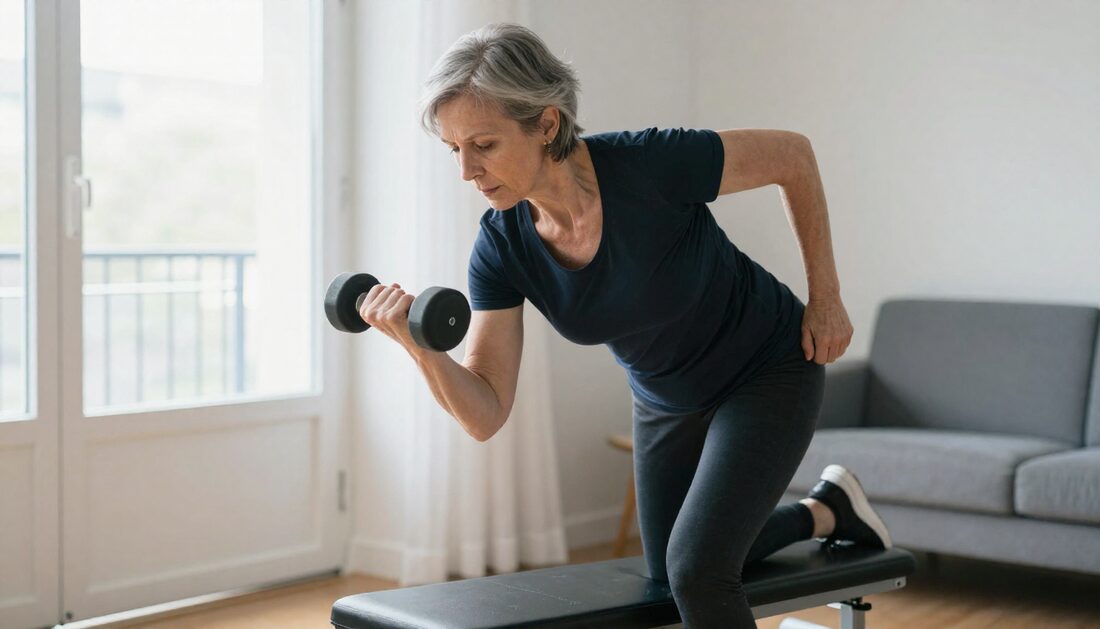
The good news: you don't need a gym or a complicated programme. Here's what the evidence supports for people over 40:
Resistance training twice a week minimum. Compound movements that work multiple joints — squats, hinges (like deadlifts or Romanian deadlifts), pushing (press-ups, shoulder press), and pulling (rows, pull-ups or lat pulldowns). These hit the major muscle groups efficiently. Twice a week is enough to maintain and gradually build; three times is better for growth.
Add a power element. This doesn't mean jumping or high-impact work. Power can be trained through explosive chair stands (sit down slowly, stand up as fast as possible), medicine ball throws against a wall, or simply performing the concentric (lifting) phase of any exercise as fast as possible with controlled weight. Even a short set of quick chair stands on most days is an easy way to start.
Test yourself occasionally. The sit-to-stand test — how many times can you stand up from a chair without using your arms in 30 seconds — is a legitimate functional fitness test. Published standards start at age 60, where around 12 or more is typical; in your 40s and 50s you'd expect to beat that comfortably. If you're well below 12, it's worth working on — and the best use of the test is to track your own score over time.
Eat enough protein. Resistance training without adequate protein produces far smaller gains. Research on strength training suggests gains level off at around 1.6g per kg of bodyweight per day, spread across meals (check with your doctor first if you have kidney problems). Without this, building and retaining muscle is significantly harder regardless of how much you train.
The Bigger Picture
Longevity research is increasingly converging on a simple message: the combination of cardiovascular fitness and muscle strength is the most powerful predictor of how long and how well you'll live. Not one or the other — both. Cardio protects your heart and metabolic health. Muscle protects your physical independence, metabolic rate, and apparently much more.
Grip a heavy bag of shopping. Stand up from the floor without using your hands. Carry luggage overhead. These functional tasks are what muscle mass and power actually translate into — and they become non-trivial in your 60s and 70s if you don't invest in them now.
Want a simple plan to reset your health after 40?
Get the Free Guide →